Plan the exam before opening the exam paper maker app
A weekly test and a half-yearly examination have different demands. The weekly test may focus on recent learning, while a half-yearly paper needs balanced coverage across several taught units. Write down the assessment purpose, chapters, duration and total marks first. Then share this brief with the subject teacher or examination coordinator responsible for the paper.
A useful brief also identifies the medium and expected response length. For example, a five-mark explanation should not be judged with the same expectations as a one-mark fact. Agreeing on these decisions early makes later checking more consistent and reduces repeated changes to the draft.
Convert the brief into sections and marks
Create a simple blueprint that connects chapters with question formats and marks. It can include objective questions, very short answers, short answers, long answers and case-based tasks where appropriate. The exact distribution should follow the school's requirements and the applicable course guidance; there is no universal pattern that fits every board and class.
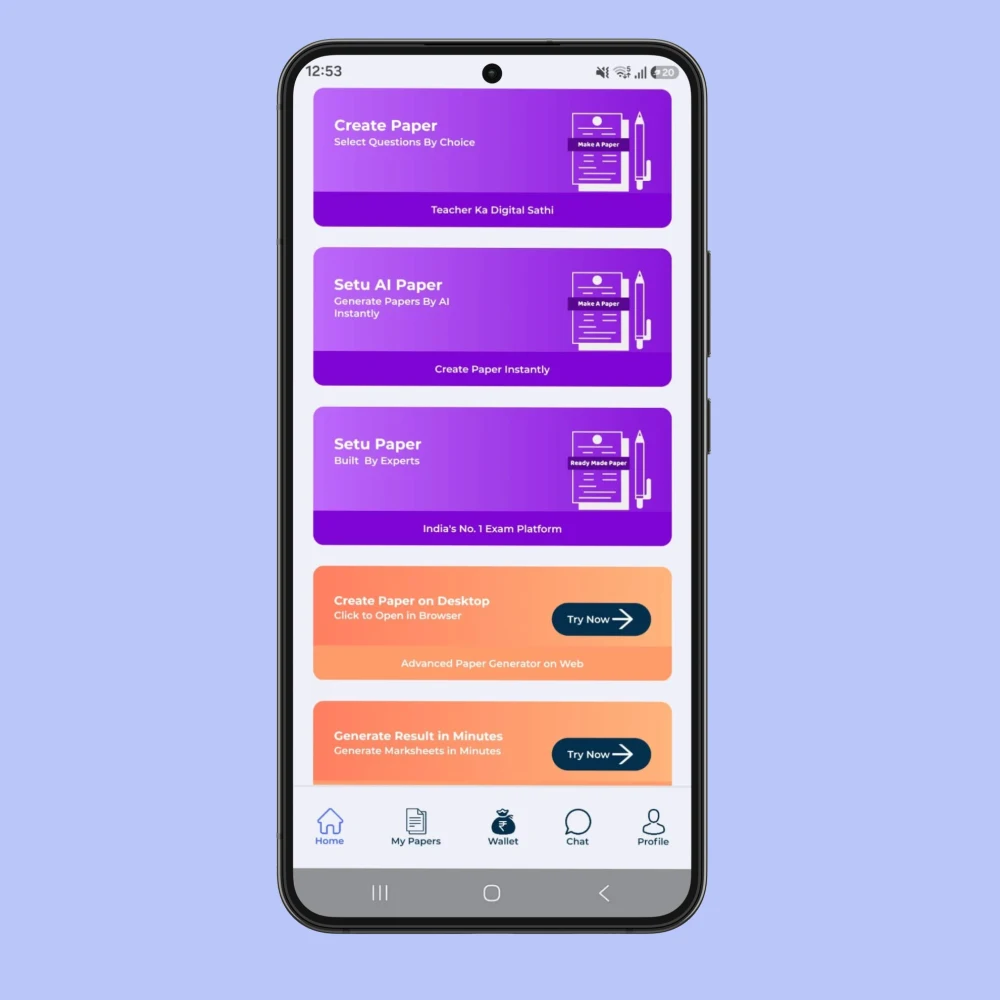
When the questions are selected in Shala Setu, compare the resulting paper with that blueprint. Check the sum of the marks twice: once by question and once by section. If students have internal choices, count only the marks they are expected to attempt. Otherwise, an apparently balanced paper can display an incorrect maximum.
Review difficulty and time together
Difficulty is about the thinking required, not simply the length of the question. A short interpretation task can be demanding, while a long recall answer can be predictable. Therefore, read each item for both its cognitive demand and its likely writing time. Leave room for students to read instructions and review their work within the examination period.
Use a colleague review when possible. Ask the reviewer to solve a selection of questions, check the answer key and flag ambiguous language. For mathematics and science, inspect symbols, units and diagram labels. For languages, keep any passage, poem extract and related questions together in the printed layout.
Approve the copy that will actually be printed
School branding belongs on the final paper, along with the correct class, subject and examination details. Once a draft is approved, save a clearly named final version and separate the answer key. If a Word file is edited later, review those changes before treating its PDF as the approved copy.
The question paper maker supports preparation, while the exam paper making workflow explains review and handover in more detail. A documented final check is especially useful when several teachers contribute to the same assessment.
Frequently asked questions
Can one paper pattern be used for every board?
No. Confirm the applicable course, class and assessment requirements before choosing the distribution of questions and marks.
What should the exam coordinator check?
Check coverage, total marks, internal choices, duration, instructions, school details and the relationship between questions and answers.
Does the app decide the school examination policy?
No. The app supports paper preparation. The school and subject teachers decide the assessment brief and approve the final paper.
Official references for your teaching context
Use these public education sources to check the prescribed book, course and available resources. Choose the relevant class, medium and academic session before applying a document to your school.
Put the guide into practice
Start with your class and taught content, then review the result before using it with students. Question papers, worksheets, lesson plans and jobs use the shared Shala Setu login.
Open Shala Setu →