What is Worksheet Making For Homework?
Worksheet Making For Homework is a structured way to use a digital teacher tool for independent homework that reinforces learning without requiring unavailable support. The goal is not to replace professional judgement. It is to reduce repetitive preparation, make the workflow easier to review and produce focused practice that learners can complete, teachers can review and schools can reuse.
This article addresses the specific search intent worksheet making for homework. For the broader product overview, visit Worksheet Maker.
Why this workflow matters
Teachers often search for worksheet making for homework because the academic decisions and the document preparation happen at the same time. A useful process separates them. First decide what learners should know or do; then select content and structure; finally review the classroom-ready output. This order helps a polished file remain connected to actual teaching.
For this use case, the practical advantage is to keep instructions self-contained and the workload proportionate to the purpose. Speed is helpful only when it preserves the checks that matter. The final resource should reflect the current class, taught chapters, available time and applicable school or board instructions—not a generic assumption about every learner.
A six-step worksheet making for homework workflow
- Choose one learning outcome and identify the exact concept, skill or chapter learners should practise.
- Decide whether the worksheet is for guided classwork, independent practice, homework, revision or support.
- Select a short progression from recall to application instead of repeating one question pattern throughout.
- Write concise learner instructions and leave enough working or response space for the expected answer.
- Prepare and review the answer key, checking examples, units, spellings, diagrams and acceptable responses.
- Add the school identity, class and date, then download or print only after a teacher completes the final check.
Build quality into the first draft
A good first draft is easier to improve when its purpose is visible. Write the intended learning outcome at the start of your planning notes. Keep chapter coverage and difficulty explicit. If a colleague reviews the resource, they should be able to see why each section exists and what evidence of learning it is meant to produce.
Pay particular attention to independence, accessibility, completion time and next-day feedback. These details make the difference between a file that merely looks complete and a resource that is genuinely usable. If the resource is formal or high-stakes, use a second authorised reviewer and retain the approved final version.
- One clear learning outcome guides the page.
- Difficulty increases in manageable steps.
- Directions can be followed without extra explanation.
- There is enough space for learner responses.
- The answer key accepts valid equivalent answers.
- The worksheet is accessible and print-friendly.
How Shala Setu fits the process
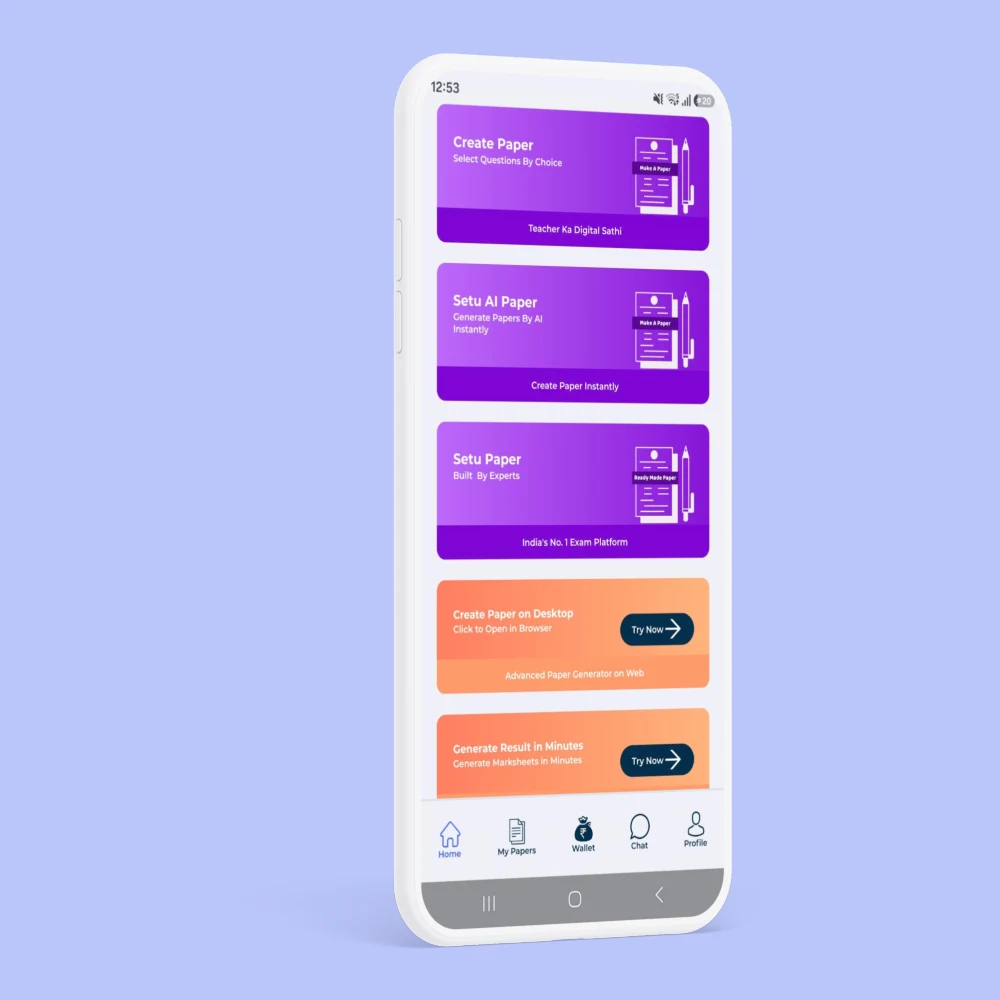
Shala Setu brings question paper creation, worksheet preparation and lesson planning into teacher-oriented workflows. For assessment work, teachers can choose relevant inputs, review selected questions and answers, add school identity details and prepare PDF or Word output. For worksheets and lesson plans, the same principle applies: start from the teaching purpose, then use the tool to organise the resource efficiently.
The tool should be treated as a preparation aid, not as the final academic authority. Teachers and authorised school teams should verify content against the relevant book, current syllabus, teaching progress and local instructions. Shala Setu is an independent platform; links to government resources below are provided for reference and do not imply endorsement.
Related search language
Teachers may describe the same need with several phrases. These related terms are included here to make the guide easier to find without repeating them unnaturally in every paragraph.
- worksheet creator online
- school worksheet maker
- chapter-wise worksheet generator
- worksheet with answers
- homework worksheet maker
- printable classroom worksheet
Official education references
Use primary government sources when checking textbooks, learning resources or school-education information. These outbound references lead only to official Indian government or NCERT websites.
- NCERT Textbooks ↗ — official textbooks for Classes I to XII.
- DIKSHA ↗ — government digital learning resources by class, subject and board.
- ePathshala ↗ — NCERT digital books and multimedia learning resources.
- Ministry of Education ↗ — official school-education information.
Frequently asked questions
What is Worksheet Making For Homework?
Worksheet Making For Homework describes a digital planning workflow for independent homework that reinforces learning without requiring unavailable support. In Shala Setu, the teacher selects the relevant academic inputs, reviews the generated resource and downloads the final output only after checking scope, language and accuracy.
Can Shala Setu support worksheet making for homework?
Shala Setu provides a worksheet maker workflow designed for teachers and schools. It can reduce repetitive selection and formatting work, while the authorised teacher remains responsible for checking independence, accessibility, completion time and next-day feedback before classroom use.
What should a teacher verify before using the final worksheet?
Verify the class and subject, taught content, instructions, question or activity quality, language, answer guidance where applicable, total time, school identity and page order. A second review is especially useful for formal assessments.
Which official sources can support curriculum checks?
Teachers can consult NCERT textbooks, DIKSHA, ePathshala and the Ministry of Education's school-education pages. The applicable board, school and current syllabus instructions should still guide the final decision.
Continue with Shala Setu
Explore the full Worksheet Maker overview, compare related teacher guides or sign in to begin a draft. Complete the final academic review before sharing or printing.